
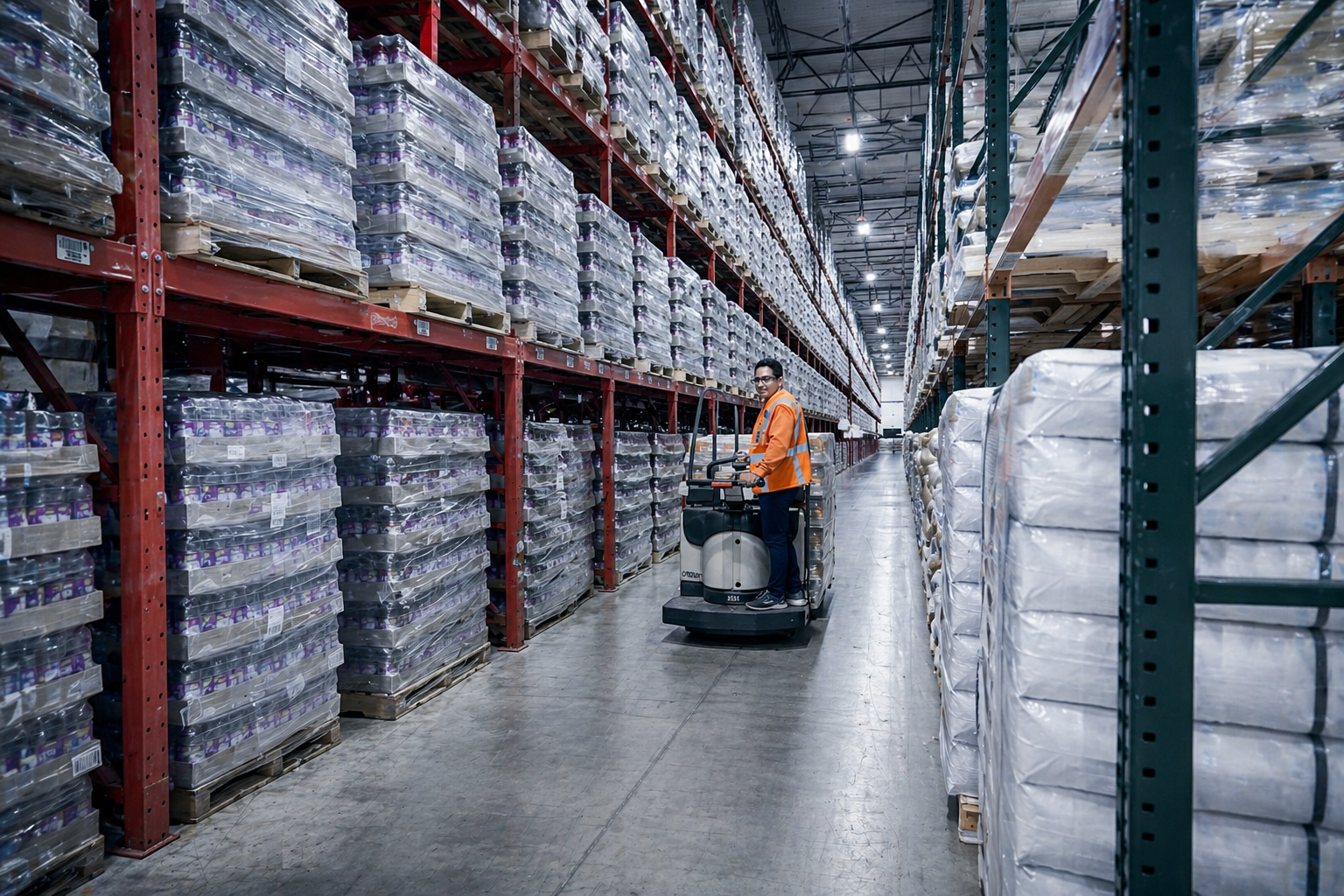
Food-Grade Warehousing in New Jersey: Ensuring Compliance, Safety, and Scalable Growth
For food and beverage companies handling regulated products, storage is more than just space; food-grade warehousing is essential for safe, compliant, and scalable supply chain operations. As a trusted food-grade 3rd-party warehouse in South Brunswick, New Jersey, Customized Distribution Services (CDS) provides controlled environments, certified processes, and experienced teams that protect product integrity from receipt through distribution.
The New Jersey facility is FDA-, BRC-, and AIB-certified, ensuring products are handled in controlled environments that reduce the risk of contamination, failed audits, and rejected shipments.
As supply chains become more complex, companies need more than storage — they need infrastructure that protects product integrity and delivers consistent performance at scale.
What Is Food-Grade Warehousing and Why Is It Important?
Food-grade warehousing is a specialized storage environment designed to safely handle regulated food and ingredient products. It enforces strict sanitation standards, controls handling processes, and uses thorough traceability through inventory systems to meet requirements such as FDA, AIB, and BRCGS. Unlike regular 3rd party warehouses, these facilities are built to:
- Prevent contamination
- Support audits and regulatory compliance
- Maintain consistent product quality throughout the supply chain
For food and beverage manufacturers, ingredient suppliers, and CPG brands, having this level of control is essential; it's not just optional.
The Role of Certifications in Protecting Your Product
Certifications verify that a warehouse meets strict safety, sanitation, and operational standards required for regulated products.
Standards such as BRCGS, FDA, and AIB ensure:
- Documented sanitation and operational procedures
- Ongoing monitoring and compliance tracking
- Audit readiness at any time
For many brands and retailers, working with a certified partner is a requirement for doing business.
More importantly, certification protects your reputation. A single compliance failure can affect much more than one shipment. It can disrupt long-term relationships and limit future growth.
What to Look for in a Warehouse and Distribution Environment
Not all warehouses operate at the same level. The difference depends on their processes, discipline, and visibility. A compliant facility should document sanitation protocols, certify handling procedures, track inventory in real time, ensure lot and batch traceability, and generate audit-ready reports.
Clean and Controlled Ambient Conditions
Ambient storage does not mean there is no control. Well-run operations maintain structured environments that protect product integrity through organization, monitoring, and consistent processes. Standardized handling and sanitation procedures ensure consistency at every stage, from receiving to shipping. Well-trained teams, clear workflows, and diligent sanitation practices work together to maintain consistency and prevent errors that could cause compliance issues.
Traceability and inventory accuracy are crucial: if you can’t track it, you can’t safeguard it. Accurate lot tracking, system-driven inventory control, and real-time visibility allow management, reporting, and product tracing at any time, especially during audits or recalls.
Reducing Risk Across the Operation
Small inefficiencies quickly compound
Processes like FIFO (First In, First Out), structured inventory management, and system-driven accuracy work together to minimize the risks of product loss, inventory aging, and compliance gaps, resulting in smoother and more reliable operations.
Scaling Operations Without Boosting Risk
As operations grow, complexity increases.
An increase in volume, SKU counts, and distribution activity throughout the network inherently introduces certain risks. In the absence of appropriate infrastructure, scaling efforts frequently result in:
- Inventory inaccuracies
- Operational bottlenecks
- Elevated compliance exposure
A strong warehousing partner allows you to scale space, labor, and processes without losing control. This flexibility ensures consistency at every stage of growth.
Why New Jersey Is a Strategic Advantage for Distribution
Location is a competitive advantage when it’s leveraged correctly.
Located in South Brunswick, New Jersey, Customized Distribution Services offers food-grade warehousing and distribution services with direct access to the Port of Newark, the NJ Turnpike, and major Northeast transportation corridors. Positioned within one of the United States' most critical logistics hubs, this location allows companies to shorten transit times, reach dense Northeast markets more quickly, and scale distribution efficiently.
- Reduce transit times
- Reach Northeast markets faster
- Improve overall distribution efficiency
For businesses seeking food-grade warehousing in New Jersey, the value extends beyond location. It’s also about speed, access, and the ability to scale distribution efficiently.
The Technology Behind Reliable Warehousing Services
Strong operations are built on strong systems.
Modern warehouse management systems (WMS) provide:
- Real-time inventory tracking
- Accurate order processing
- Visibility across locations and SKUs
- Reporting for compliance and audits
Technology helps reduce human error, improves accuracy, and gives companies the visibility they need to make informed decisions.
Food-Grade Warehousing in South Brunswick, New Jersey
Here is how that works in practice.
Customized Distribution Services(CDS), South Brunswick facility is designed to support regulated products with the infrastructure, processes, and location advantages required for efficient distribution across the Northeast.
Facility Overview
- Address:
301 Middlesex Center Blvd, Suite 3A
Monroe Township, NJ 08831 - Facility Size:
200,000 sq. ft. multi-tenet Warehouse - Hours of Operation:
Office: Monday–Friday, 7:30 am–5:00 pm
Warehouse: Monday–Friday, 6:30 am–6:30 pm - Phone:
732-305-7349
Core Services Available
This facility supports a full range of food-grade warehousing services, including:
- Dedicated and public warehousing
- Inventory management with real-time visibility
- B2B and e-commerce fulfillment
- Value-added services such as kitting, labeling, and repack
- Retail product distribution
Industries Supported
Operations are built to support regulated and high-volume products across:
- Food and beverage
- Health and beauty
- Manufacturing
- Consumer goods
- Packaging
- Non-alcoholic beverages
Strategic Transportation Access
Located in a key logistics corridor, this facility provides direct access to:
- Port of Newark and Port Elizabeth
- NJ Turnpike (Exit 8A)
- I-95 corridor
- Regional rail and intermodal networks
This positioning allows for faster inbound and outbound movement, reduced transit times, and more efficient regional distribution.
Choosing the Right 3rd Party Warehouse Partner
Not every provider is equipped to support regulated products.
The right partner should be able to answer:
- Are they operating within certified standards?
- Can they support audits and compliance requirements?
- Do they provide real-time visibility into inventory and operations?
- Can they scale with your business without sacrificing accuracy?
At Customized Distribution Services(CDS), 3rd-party warehousing is built around control, consistency, and scalability.
Our food-grade warehousing services are designed to support regulated products through:
- Certified, compliant operations
- Clean, controlled ambient environments
- Real-time inventory tracking and reporting
- Scalable infrastructure that grows with your business
- Strategic New Jersey location with nationwide distribution capabilities
We focus on building systems that reduce risk, improve visibility, and support long-term growth.
Frequently Asked Questions
What is food-grade warehousing?
Food-grade warehousing is a controlled storage environment designed to safely handle food and ingredient products. It follows strict sanitation, traceability, and compliance standards, including FDA, AIB, and BRCGS, to prevent contamination and ensure product integrity.
What is the difference between food-grade and standard warehousing?
Food-grade warehousing follows strict sanitation, handling, and compliance protocols required for regulated products, while standard warehousing does not meet these requirements.
Do I need an FDA-certified warehouse for food ingredients?
In most cases, yes. Many retailers and manufacturers require certified storage environments to ensure safety, traceability, and compliance.
What certifications should a warehouse have?
Common certifications include BRCGS, FDA registration, and AIB compliance, all of which validate operational and safety standards.
Are Ambient 3rd Party Warehouses Safe for Food Storage?
Yes. Clean, controlled, and well-managed ambient environments are suitable for many food products and ingredients that do not require temperature-controlled storage.
Why choose South Brunswick, New Jersey, for warehousing?
New Jersey offers direct access to ports, major highways, and dense population centers, enabling faster and more efficient distribution across the Northeast.
Partner with a Trusted Provider in New Jersey
- Compliance protects your brand.
- Control protects your product.
- Scalability supports your growth.
- Looking for reliable food-grade warehousing services in New Jersey?
Customized Distribution Services (CDS) provides certified, compliant, and scalable solutions designed to protect your products and support your operations as they grow.
Contact our team to get started.